Beiträge von O530 Carris PT

Willkommen in der OMSI-WebDisk!
Als Gast kannst du nur Inhalte in deiner ausgewählten Sprache sehen. Registrierte Nutzer können die Sichtbarkeit anderer Sprachen in ihrem Kontrollzentrum aktivieren, weitere Infos hier.
Alle Themen sind in den Foren mit einer Sprachflagge gekennzeichnet: = Englisch [EN], = Deutsch [DE], = Französisch [FR]. Wenn du die angegebene Sprache nicht beherrschst, schreibe auf Englisch!

    KamaBus's 2016-2017 MAN Lion's City Ü (A20) have gotten the new livery, new upholstery for seats, as well Wi-Fi. The first to get these updates was #4600, the first unit, a 2016 unit. It was caught operating on Bad Hügelsdorf's line 306.


    Here is a travelogue of the journey of #4600. First, it starts in Augustaplatz, one of the busy squares of the town. Later it will move towards Leopoldsplatz-Luisenstrasse.


    After dealing with the hell of narrow streets, #4600 advances to Schillerplatz, before going for a loop run at Auf der Halde. The bus performs nicely even on this condition, denoting that the Violet Arrow livery goes well even in Bad Hügelsdorf.


    The road to Kunsthalle is the next thing on the menu for #4600. But first, a stop at Einschlag, to pick up more passengers on this particular stop. And to drop off some others.


    Kunsthalle marks the end of Bad Hügelsdorf itself. #4600 enters the main bus stop of the arts room, picking up and dropping off some passengers.


    A great deal of roadway separates Kunsthalle from the beginning of the suburban area which the line 306 operates, and this includes a stop at Schweigrotherplatz.


    After Woerthstrasse and Oberer Schussbach, the line 306 is finally outside Bad Hügelsdorf. #4600 will now feel more at home, with Wieseneck being in the horizon.


    Arriving now at Wieseneck, driving through the final km of the line. The end of the line 306 will be reached when #4600 ends the journey at the cemetery of Wieseneck (Wieseneck Friedhof). The journey lasted 35 minutes.


    Bringing the new flagship of KamaBus's Bewitching Violet Arrow Series, the 6287-6399 series part of the massive 280-bus acquistion of 2024-2026 Mercedes-Benz Citaro C2GÜ (the other order part is the 5000-5167 series). This one was caught on Rheinhausen's line 45, from Oberfeld to Rheinhaue and back.


    First, #6287, a 2024 model, our guest of honor, started its journey at Oberfeld, having passed through the Kloster (Church) in Oberfeld, before moving towards outside town. The bus feels adequate to the needs of this line despite being a large artic.


    After leaving Oberfeld, #6287 heads now to the highway towards Rheinhausen. The Bewitching Violet Arrow package makes the bus less prone to dirtiness at high speed. Used on most of the bus orders for KamaBus and converted units from CortanaBus.


    In Rheinhausen's surroundings, #6287 also takes stops at the Rheinpark's shopping centre and retail park. All of this before entering the surrounding suburb of Eichstedt.


    After entering Rheinhausen properly, #6287 stopped at Neustadter Strasse and at the Park & Ride Stadtpark, to catch passengers that park their cars there, in order to use the bus towards the centre of Rheinhausen.


    #6287 arrived to the bustling city centre of Rheinhausen, after the activity of picking up and dropping off at the Hauptbahnhof. So far, not too many glitches with the first of these 280 units. Also a eye candy at the bustling centre.


    The line 45 that came from Oberfeld arrived to Rheinhaue after 30 minutes of run. Not too many issues with the usage of the articulated in this line. Now, the road is towards where we started: Oberfeld. #6287 changed the destination display to the opposite end of the line.


    The Hauptbahnhof is the place of major passenger interchange between buses and trains, and between buses themselves. The line 45 isn't exception, and #6287 went through to pick up more passengers towards the destination.


    The line 45, by this photo time, left Rheinhausen and started to pick up and drop off passengers in the suburb of Eichstedt. Not too many stops for #6287 before it leaves

    for the highway again.


    #6287 is now on the highway, after leaving Rheinhausen and its outskirts. Oberfeld isn't too far for this bus, which is concluding the run on the line 45 of this map. A line with fair uptake for this bus.


    The end of the line for #6287 is in Oberfeld, after doing the line 45 after 32 minutes. Not too many issues to report with the usage of this articulated bus to report either. These two Bewitching series will replace the first 2011-2012 Mercedes-Benz Citaro Facelift buses that came from CortanaBus.


    For something completely different: CCFL (Companhia Carris de Ferro de Lisboa) was caught outside of Lisbon! A Carris DE60LF in the 1997 livery was caught in Chicago doing the line 124. The bus was 4119 (operationally as 1579, Portuguese reg. 19-10-II). This bus marked the era of transition of Carris from the orange to yellow for its buses, although temporarily retaining the old logo.


    First, from Navy Pier to Ogilvie and Union, where the route has to face, among other roadways, Grand Avenue, Columbus Drive, Illinois Street, Michigan Avenue, and Madison and Clinton Streets, where it ends, after 26 minutes of route.


    Now, going eastbound, to Navy Pier. There's not much time for 4119 (1579) to layover. Because the route to Navy Pier will be a handful and handsome. Operating via Clinton and Van Buren Streets, Washington Blvd (connecting to LaSalle Street), Columbus Drive and Grand Avenue, where it finishes after 27 minutes.


    The line 9371 of Alto da Boa Viagem gained a new sibling, albeit smaller and a shuttle: Behold the P371, which connects Vila de Garanhos to the regional park in Cruz de Ferro. It is a circular route (technically), and connects the park to both the 9371 and 9371X.


    The bus chosen to demonstrate the route was the Mercedes-Benz O 305 formerly operated by CTT. Perfect to transport passengers for this route. The vehicle is #9330 (reg. NV-73-67, 1983). We are starting from the terminus in Vila de Garanhos's centre, and in the new terminal purposely built for the shuttle.


    After leaving Vila de Garanhos's main area, P371 connects to the Bairro da Fortuna located in the exclave, serving the community there. Doesn't replace the line 9371 in itself, however.


    After a short run on EN247, the line crosses to CR1150 (EN is Estrada Nacional and CR is Caminho Regional) and heads towards Cruz de Ferro's main area. After that, leaves the village for the regional park, via EN12.


    The stretch of the EN12 road in which circulates this line, is filled with agricultural fields, a nice view before entering the Parque Regional de Cruz de Ferro, where P371 has the focus stop.


    It is a short turn in the Parque Regional de Cruz de Ferro, but enough to make sure some passengers drop off and more are picked up in the route towards where we came from.


    EN247 is back on the menu for P371 and for #9330. The speed of 80 km/h is not a problem for the O 305 bus. We are almost at Vila de Garanhos.


    We are back at Vila de Garanhos, and the Praça Comercial, in the variant of EN247, EN247-2. The bus uses this stretch to drop passengers from the regional park in Cruz de Ferro. The line goes to the Hospital a kilometre later.


    We reached the end of the line, with a route completed in the same place where we started. In all, 20 minutes was what was necessary to complete this route. An interesting option for a smaller variant of a large line.


    From CortanaBus, it changed to KamaBus, and from #7500, it changed to #9200 (and the wheels and ticketing system changed, too). Krummenaab changed too, but the line 6295 changed little (apart from Flossenbürg and surroundings).


    First, #9200 is bound to make the Eger Bahnhof (Cheb Nadrazi)-bound direction of the line. Here it is after leaving the Flossenbürg station, and the community that serves.


    After a long run in the countryside roads, managing the speed while doing occasional breaking, #9200 is now heading towards Falkenberg.


    The road between Falkenberg and Baumgarten can be treacherous if you are not ready to handle how the roads are. Fortunately, #9200 isn't a 13m long vehicle, so it handles well them.


    After Baumgarten, Wurz and Wollenschof, the bus crosses the Czech-German border, to get into Cheb (or Eger), ending the journey at the railroad station, after 26 minutes.


    There's not much time for layover due to the international characteristics of this line, and therefore, #9200 had to move quickly. Wurz was a good place to take a shot of the bus.


    Doing the hilly road between Baumgarten and Falkenberg can be worse if is climbing up. The mirrors were not a luxury here, but rather a high necessity in order to avoid collisions.


    Even if the faith could be lost with the hilly roads between Baumgarten and Falkenberg, the road afterwards is conjoined with a good surprise, the railroad bridge that crosses the valley, towards Flossenbürg.


    Flossenbürg has a history, and the Holocaust Memorial is a place of remembrance. #9200 is almost finishing its journey, where drops off some passengers (albeit picks up two).


    The journey ended at the Flossenbürg Bahnhof after completing the journey in 28 minutes, complicated by the immense unpredictability of the hairpins that bogged the bus down in some sections.


    KamaBus's decision of renaming the former 1300 series, the Mercedes-Benz Intouro L, into the 7000 series may have been quite controversial. But with the former Citaro Facelifts of 2011-2013 on their way out, and with the Setra S 317 UL-GT units moved to 7850-7899, that became easier. 7000, the ex-1300, was caught operating on Lemmental's line 455, in a run to Hoheneck.


    The run, as always, started with 7000 starts at Lemmental's ZOB, and afterwards starts to proceed to Kreiskrankenhaus and the Altes Rathaus.


    Now, with that away, 7000 moves away to the Hauptbahnhof, like the other routes that irradiate from the ZOB bus terminal.


    Now, 7000 moves towards the city limits and towards areas outside of Lemmental, including Bergefürth and Grünschildken.


    After collecting a lot of passengers at Grünschildken, 7000 heads towards the autobahn, where it would cross 100 km/h while operating on this line. Per KamaBus policy, no standing passenger is allowed on this stretch.


    Exiting the Autobahn, 7000 now heads towards Ösingkofen, Ebensberg and Eichenförst, before heading towards the end of the route.


    And, at Hoheneck, the run wraps up near the terminal. It took about 30-35 minutes for #7000 to complete the run in one of the most classical lines of this map.


    Kessler Reisen has also its own fleet of MAN A20 NÜ 313s, both in the DF and EF versions. They are mostly used on the contracted routes for OVR, such as the 732, between Lichtentanne and Bad Lemnitz.


    First, we will start with the DF version of the bus, on the Bad Lemnitz bound segment. We will start at the Lichtentanne's ZOB, for a quick run through Lichtentanne, Herberdorf, Haselbach, Steinheid, Alexanderberg and in the end, Bad Lemnitz #520 is the guest of honor for this run. An NÜ 313 DF, of course.


    The journey for mistress #520 ended at Bad Lemnitz, 26 minutes after the departure at Lichtentanne. Now, the EF counterpart, number #661, was already at the school of Bad Lemnitz waiting to start is journey towards Lichtentanne's bus terminal. It is (almost) the same route, but in the opposite direction.


    The journey for our A20 EF, #661, ended in Lichtentanne's bus terminal, after 30 minutes of run. Kessler Reisen uses these buses on lines 732 and 739, although 731 can also run them (or the OVR or Müller units).


    KamaBus #9955, the 1983 Mercedes-Benz O 307 with rollsigns, has now been called for action in Alto da Boa Viagem's line 9374. A line with its own challenges, although crossing some interesting towns (e.g, Vila Rica), villages (e.g., Gavião) and small places (e.g, Abegoaria). A line that does great with the manual transmission (GO 190) equipped bus.


    The line starts at Porto Alto's school, located near the town border and in the EN118 road. This is the southbound terminus of the line, serving this important school that serves students from Castanheira and Gavião.
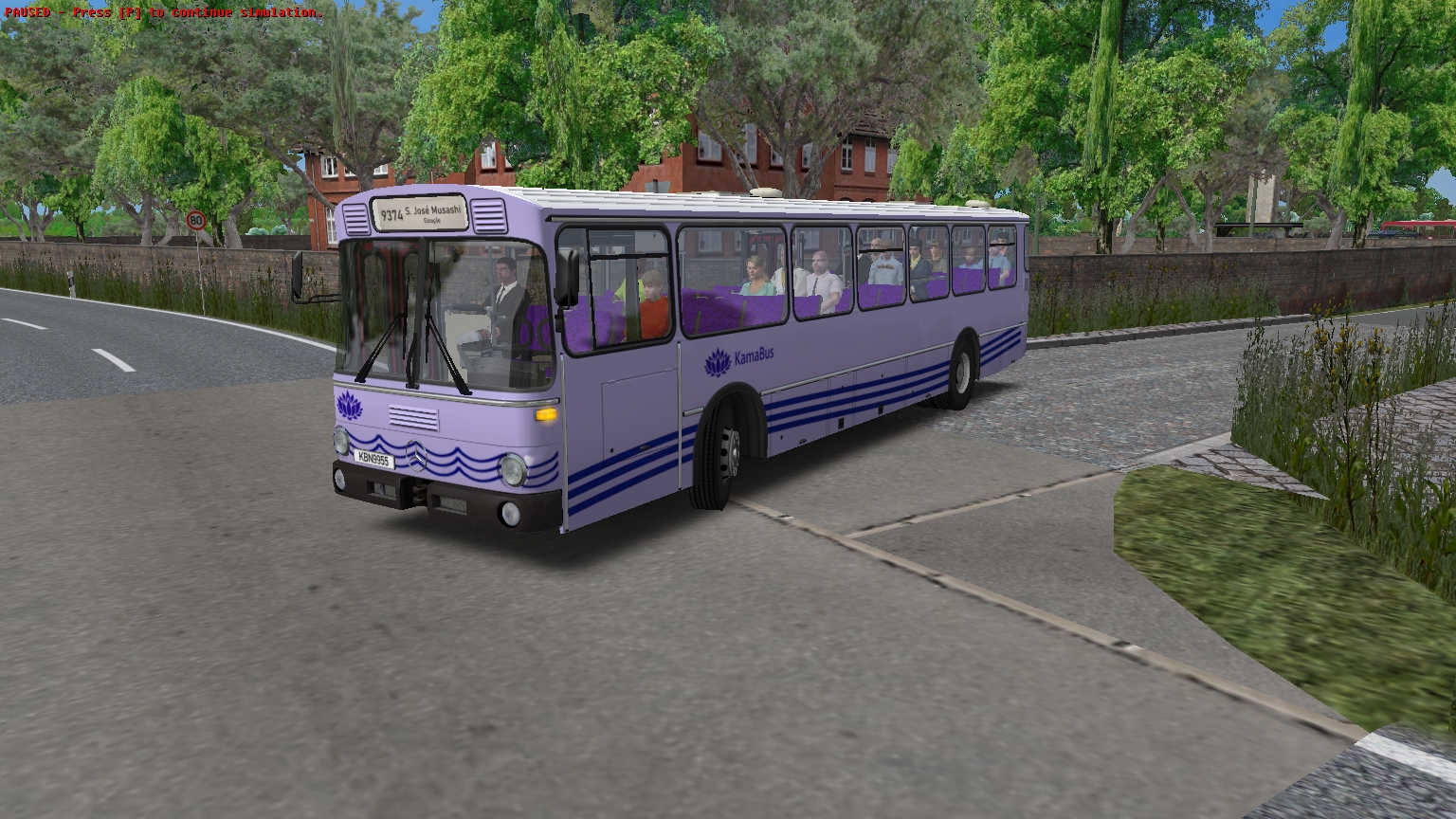


    Switching from the EN118, to the main road of Porto Alto, EN10. Here, #9955 picks more passengers that will go to points beyond Porto Alto, including the terminus of S. José de Musashi.
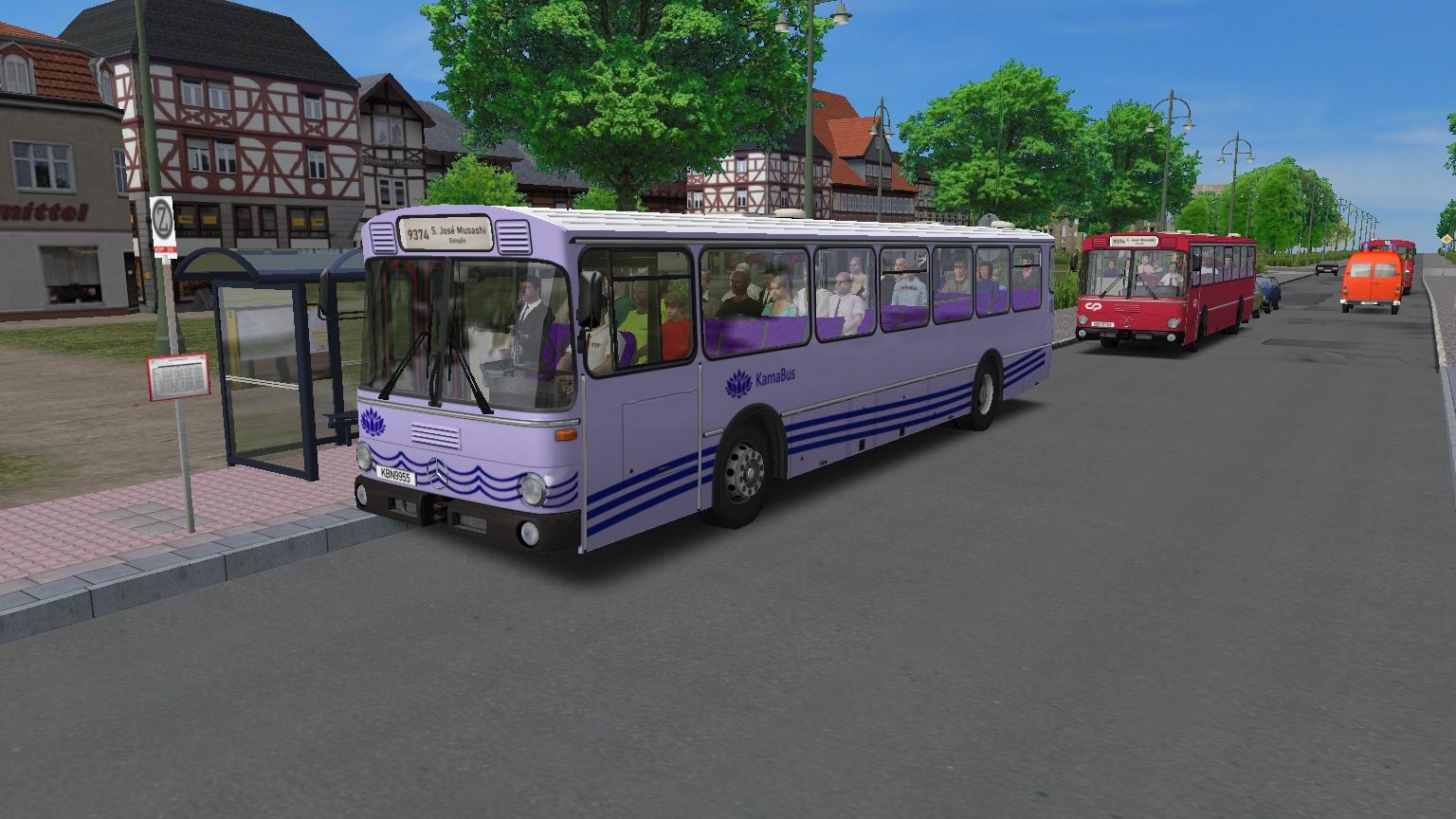


    The village of Gavião is also served by this line. Although it has to invert in the backstreets after the post station, then it inverts towards EN114, the road used to access the village.
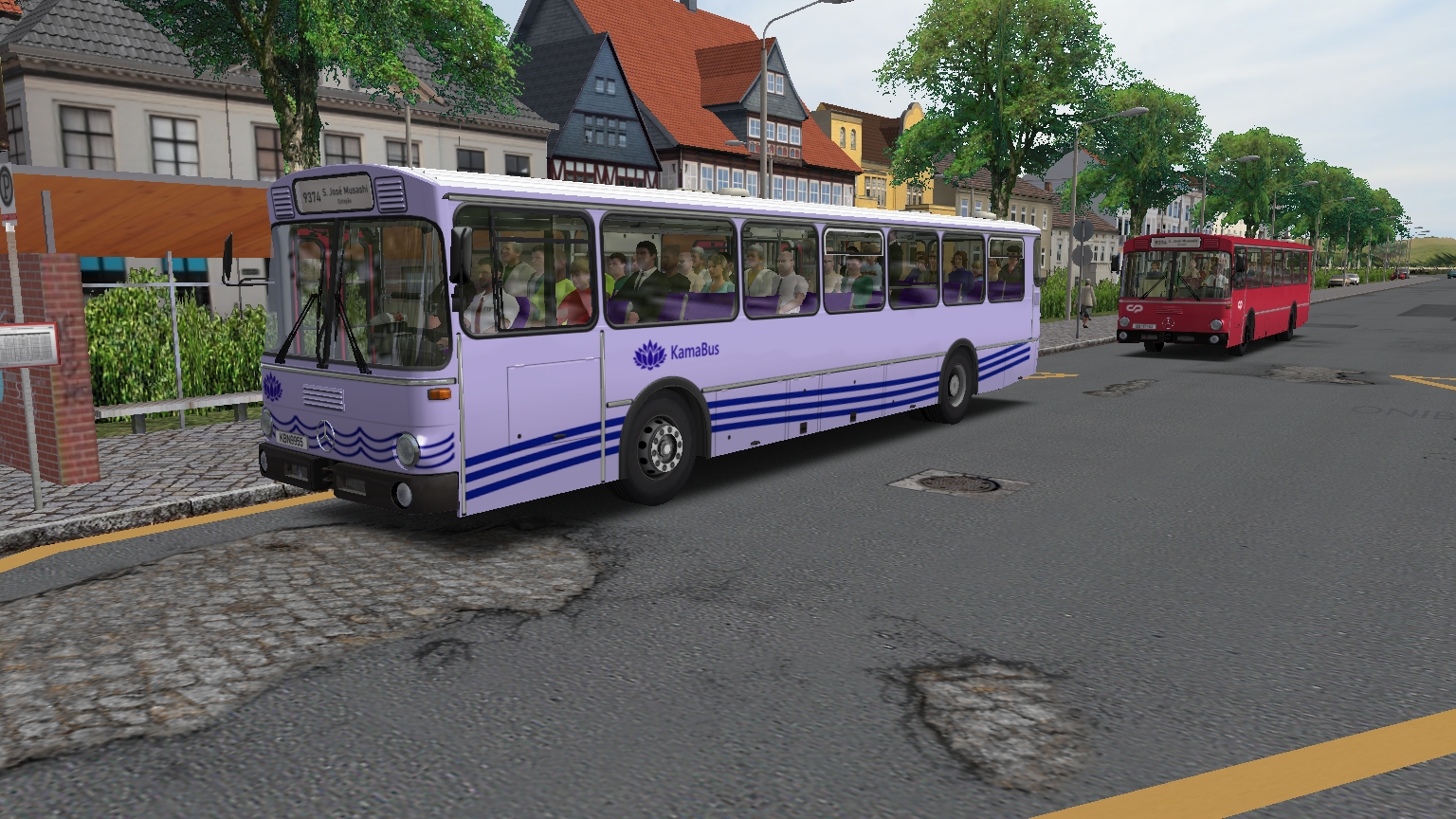


    After Poços Novos, the EN114 road leads us to Vila Rica, including to the small train station serving the town. It crosses the bridge that serves the Tejo river. #9955 is here doing 60 km/h towards the Apeadeiro, before cutting the speed to half to cross a railroad crossing.
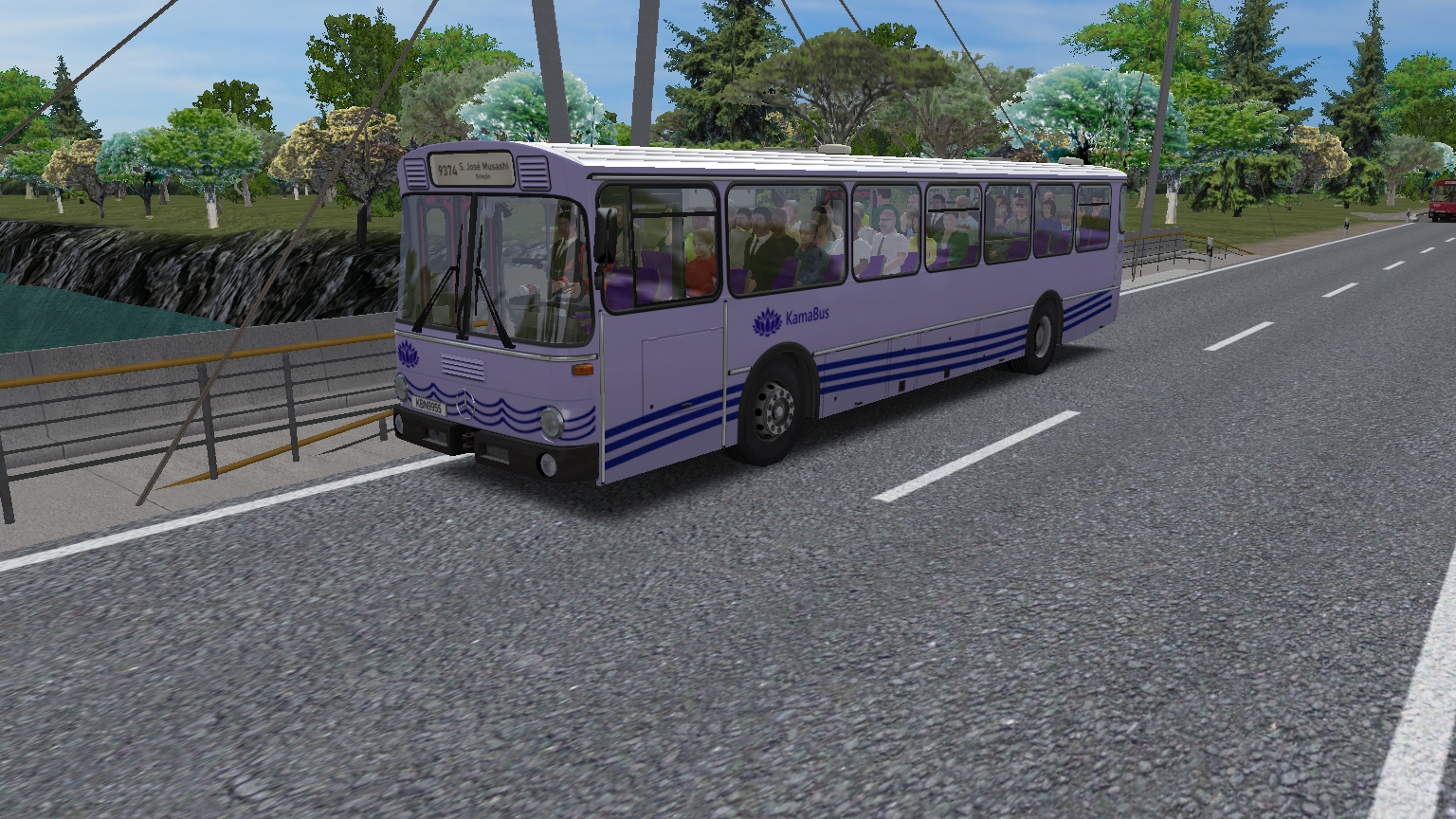


    Vila Rica is a bustling town served by the line 9374 and has the EN114 as the main road of access. Many people decide to leave here, or on the Universidade do Ribatejo stop nearby. Then, gets into towards Benfica, another town, using the same EN114.
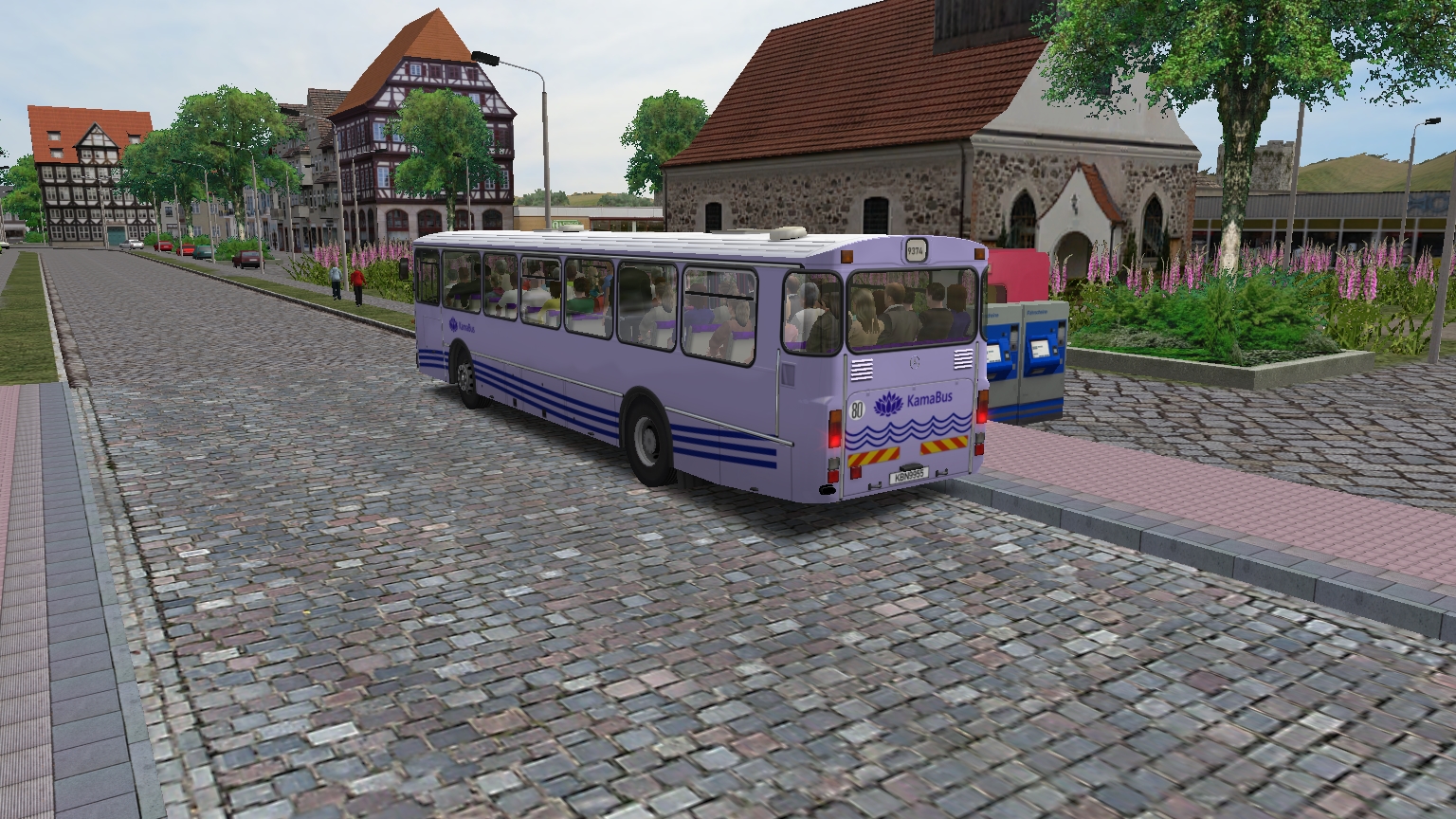


    The line 9374, and KamaBus #9955 here, exists momentarily the EN114 road to serve S. Brás do Caniço. Then, after serving the industrial zone, moves towards Vale de Faias, a village served by the line in its edge, although it is inside EN114, it has a 4-lane road configuration.
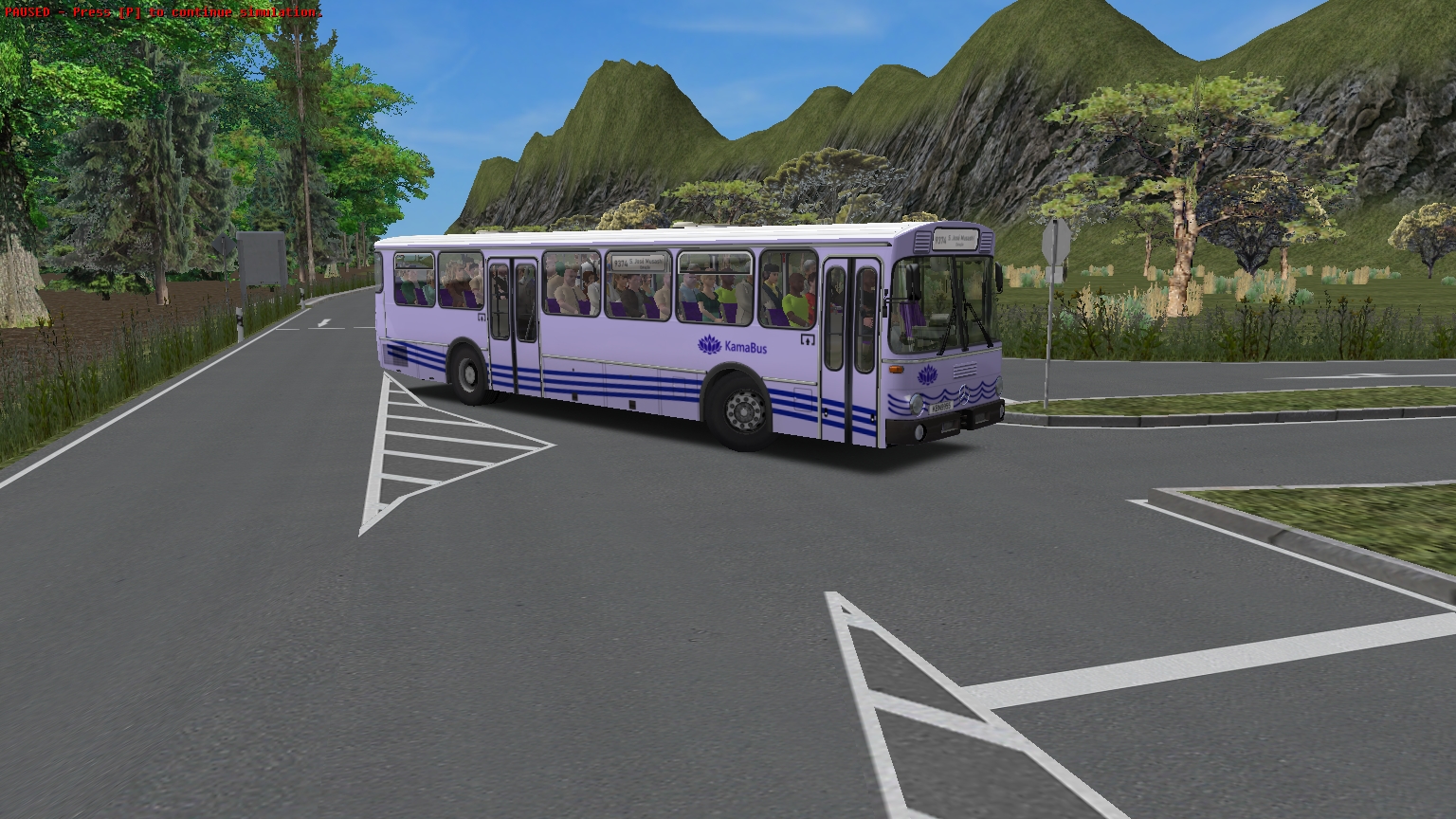


    The small place of Abegoaria is the first stop of the line 9374 after this line leaves EN114. In the EN114-8 variant is where the place seats, between Vale de Faias and São José de Musashi. #9955 stops here to drop off passengers.
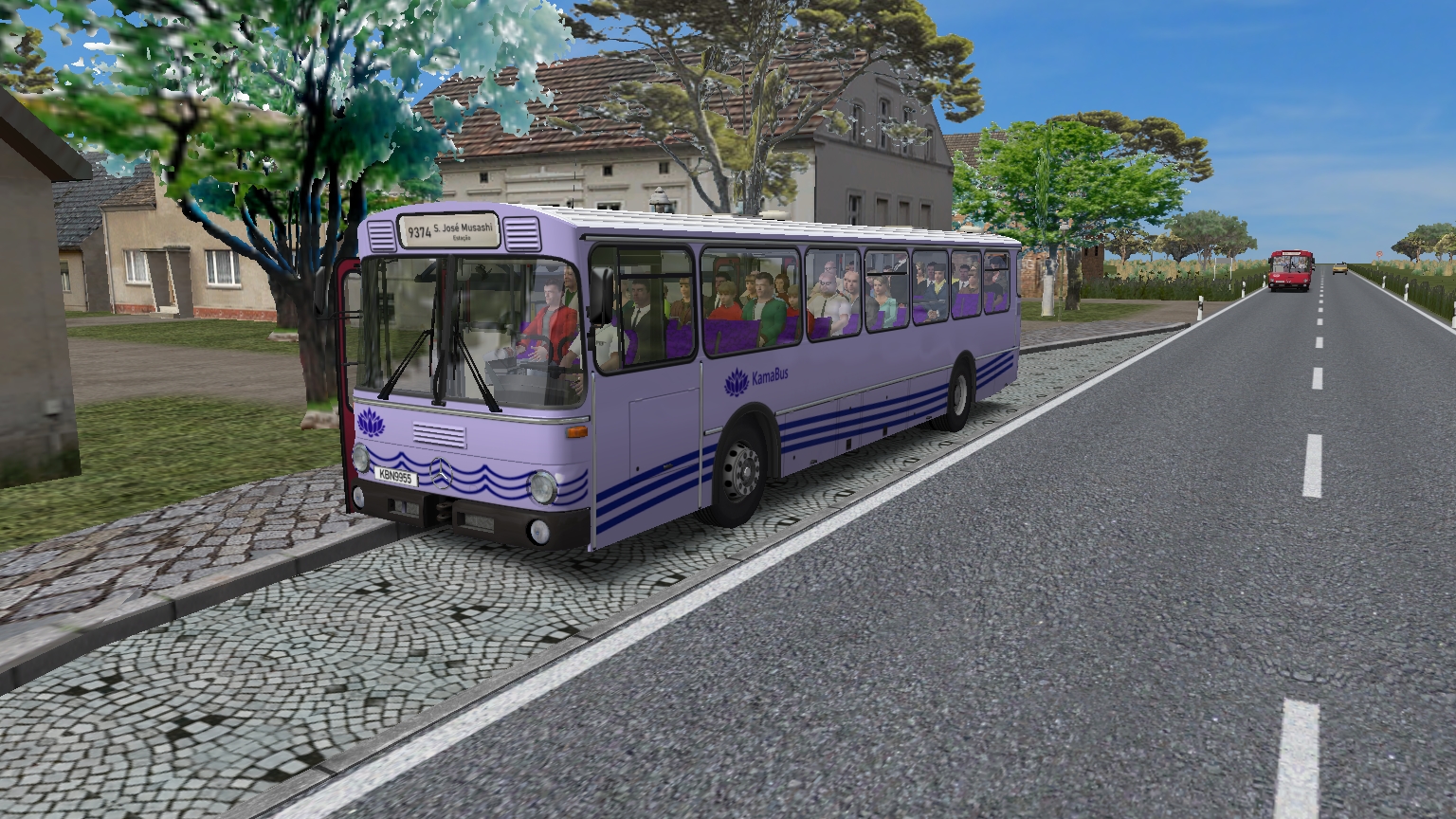


    We reached São José de Musashi, but there's two more stops before it ends on the railroad station that serves the Linha do Leste that goes to points towards Elvas (in Alentejo) and Badajoz (in Spain). Before serving the station, #9955 passes through the stadium and sports complex of the Musashiense Futebol Clube.
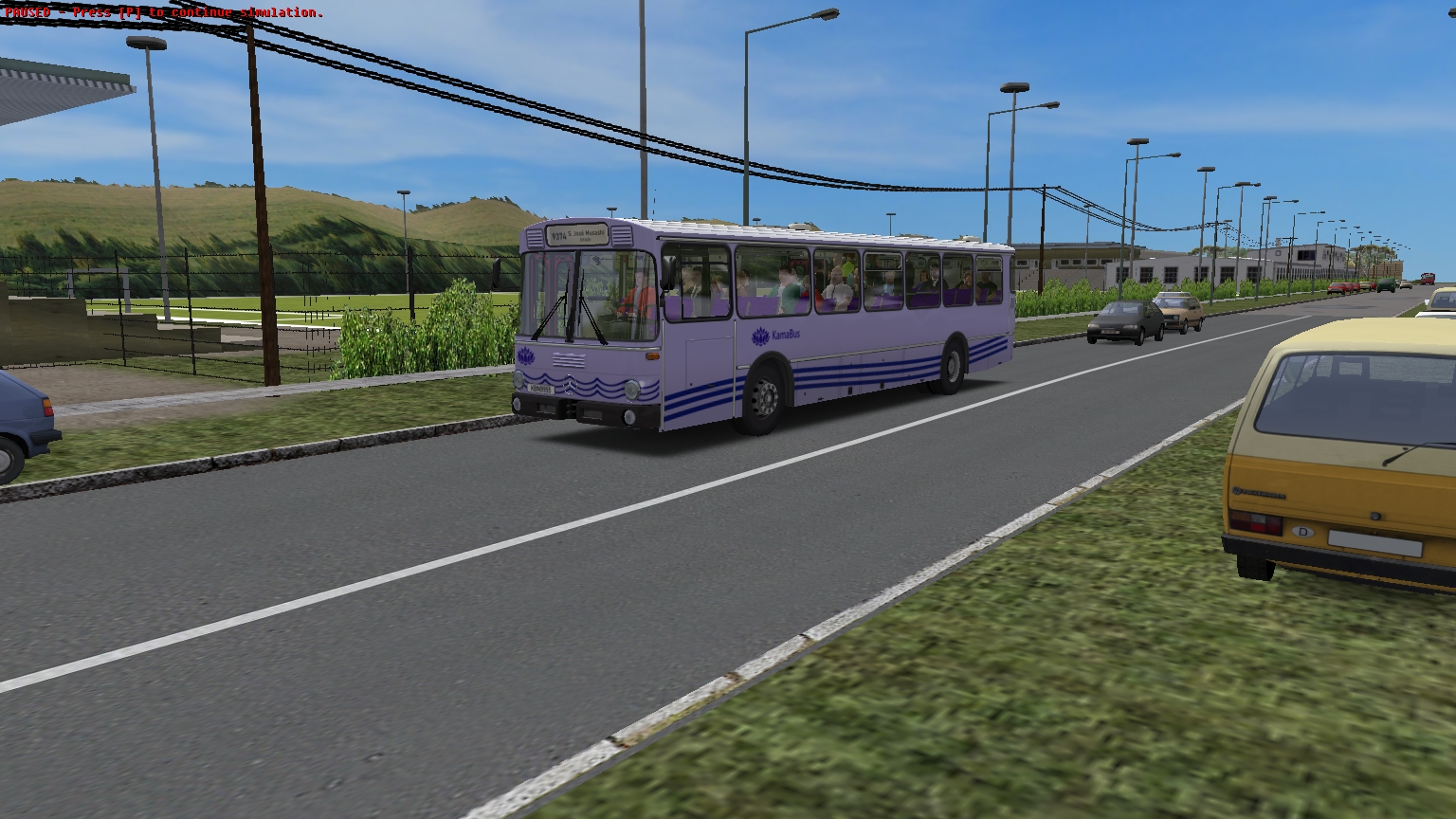


    After finishing the service at the railroad station of São José de Musashi, KamaBus #9955 heads towards the MTB North depot of São José de Musashi (called Garagem de S. José de Musashi). The O 307 bus waits patiently for the next assignment.
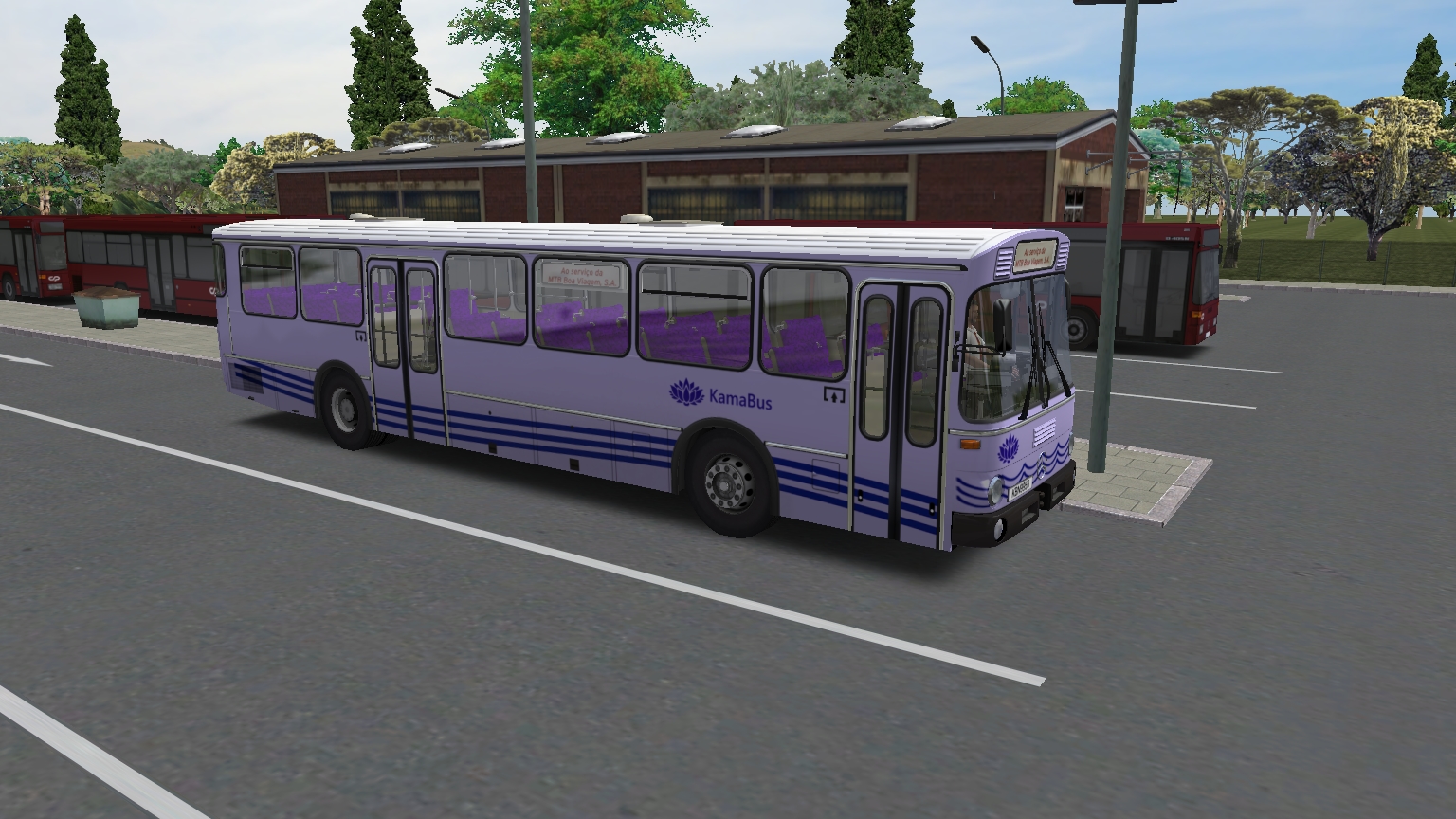


    OVR has MAN NÜ 313 that are diesel-powered, but can have a different front door configuration. Case in point, two different NÜ 313s, one is a A20 DF and another is an EF were seen on the same route, the 735 from Lichtentanne's ZOB to Altenfeld's railroad station. This mini-travelogue accompains the DF doing the Altenfeld-bound route with the DF, and then back to Lichtentanne with the EF.


    First, the DF goes into the Altenfeld-bound 735, making an indeleble impression between Lichtentanne, Heberndorf, Heinrichschutte until the terminus of Altenfeld. The bus manages to provide stability even with 310 hp.


    Now, the EF takes over at Altenfeld, doing the route towards Lichtentanne. The difference is that the front door is smaller than the DF counterpart. Still, it handled the route between Altenfeld and Lichtentanne greatly.


    No. This is not a KamaBus 0500-0599 series MAN NÜ 313 DF CNG (A20) in the livery of the Omnibusverkehr-Rennsteig (OVR). It is actually one of the MAN A20 DF units operated by OVR in Thüringer Wald. Unit #604 was the guest of honor in the line 732, from Lichtentanne to Bad Lemnitz.


    We will start from the ZOB, where all the lines converge. It merges well with the rest of the fleet.


    The central market of Lichtentanne was other of the points which this line travels into. A bustling area, where the easiness of entrance of the A20 DF is a nice touch.


    With Lichtentanne now out of our way, we are going to Herbendorf and other points in the map.


    The bus is now going to Heschwenda, Haselbach and Steinweid, first stopping at Heschwenda for attending the community.


    Entering Haselbach, but the stop is to the right. So the bus turns there first to make the stop, before moving into the road section towards Steinweid.


    Finally heading towards Steinweid where #604 is going, and then from Steinweid to Alexanderberg crossing through a narrow driveway where carefulness is necessary.


    With Steinweid and Alexanderberg out, the road towards Bad Lemnitz is a world of hurt for a CNG bus if you are not prepared.


    Finally, we reached the end of the line at Bad Lemnitz, after 28 minutes of journey, even after the challenge of a hilly road. This bus did okay despite the challenge.


    A good day to ride on a special bus: KamaBus's 2004 MAN NÜ 313 CNG #0550, part of the 0500-0599 series from 2004-2005. #0550 was operating on Römerberg's line 626, proving that can operate on the steeper hills between Römerberg and Zavelstein (and also in the opposite direction), crossing through Baach and Kanzach. Not too much of a challenge.


    #0550 has started first to drive the route bound for Zavelstein, at the Römerberg Busbahnhof, where it drives through the city until Hohenstaufenstraße, where then, leaves town limits.


    The Zavelstein-bound journey ended, but it is time to wait and to go back to Römerberg! This Römerberg-bound journey includes a sneak peek at Michaelkirche in Hohenreuth and the area of Waldschlossen (served in both directions). No issues to report with #0550.


    Rodoviária do Alentejo's Setra S 417 UL is making an appearance on Borszöny's line 284. A Portuguese bus doing a test run on Hungary's hilly country roads, demonstrating the ability of their drivers in using a manual transmission.


    In the same day as #2550, there was another bus on the road, but not of the same kind: A 1999 Setra S 319 UL was also doing the route. It was the reserve unit of the Special Fleet Command (SFC) number #11900! Here is a full travelogue, somewhat similar yet somewhat different, since the route here was the ZOB-bound 456 of Lemmental.


    First, we start at Neu-Weiberg, where #2550 ended the journey (although it did the return trip, it wasn't documented). Thank you for picking KamaBus-RVL for your journey once again!


    Now, off to Frankenberg, not before getting into Hohnscheid. The bus, with the same ZF automatic transmission, handled the speeds of the road quite well, despite hitches from my part.


    Now, still before getting into Frankenwald, It gets into Neu-Frankenwald, and the 15m Setra manages to get through, with some more passengers. The Violet Arrow livery imposes its presence on the village.


    Now, returning to Lemmental's Gewerbegebiet Müngersthal industrial suburb, this bus is drawing close to a major railroad crossing, where has also a bus stop nearby.

    #11900 is shown here approaching that phase.


    With the industrial suburb of Gewerbegebiet Müngersthal behind, as well the enclaved suburb of Kultgen, the bus is heading towards the rest of the stops in this section.


    One of them, is of course, the same Bahnhof West that we got with #2550, but here, is visible the entire structure of the railroad station itself.


    Afterwards, goes all through the sections explored with #2550, including Leibnitzplatz and Hauptbahnhof. Here is #11900 dropping off passengers at Leibinitzplatz, close to the end of our journey.


    We reached the end of the line, and of our journey at Lemmental's ZOB, after also 35 minutes, and after crossing the Hauptbahnhof and Altes Rathaus. Thank you for your interest!


    Working on Lemmental's line 456 with KamaBus's 2003-2005 Mercedes-Benz Integro O 550 L Euro 3 #2550 (part of the 2400-2699 series, albeit with a variation on spec). This is a travelogue of the Neu-Weiberg-bound route.


    First, we leave the ZOB (main bus terminal), and heading towards the main areas of Lemmental. Here, the Violet Arrow awaits for turning into the central areas including the Kreiskrankenhaus e Altes Rathaus.


    The first stop of high importance is Lemmental's Hauptbahnhof, i.e, the main station, the heart of KamaBus Lemmental's main operations.


    Now, we left the Hauptbahnhof for areas further from the centre. This time, after going through a tunnel, and additional kilometres of increasingly suburban areas, we are approaching another station: Bahnhof West (the second station served by this line).


    With this railroad station and the Evangelischer Krankenhaus out of the way, this bus goes through the enclaved suburb of Kultgen, before going to the edge of Lemmental (and Gewerbegebiet Müngersthal). Done good with a 15 metre bus.


    Now, #2550 is about to turn to a road that will bring the bus to outside of the combined suburb of Lemmental and Gewerbegebiet Müngersthal, towards areas including Frankenwald.


    With Frankenwald behind, #2550 now heads towards Neu-Frankenwald, Hohnscheid, and then to the terminus of Neu-Weiberg. The ZF Ecomat II automatic transmission handles this segment well.


    After all of these, our journey reached the end of the line at Neu-Weiberg. 35 minutes after the departure from Lemmental's ZOB. This bus will then do the ZOB-bound segment of this line (not shown here).


    KamaBus's 2023-2024 MAN Lion's Intercity LE 13m (numbered 4400-4509) are the first of a vast batch of MAN Lion's Intercity buses ordered by the enterprise in 2021, replacing older units (later MB O 307s and earlier O 407s). One of them, the first unit #4400, operated on Juligen's line 223.


    The first of the Coach Class of KamaBus's Special Fleet Command (where all 1xxxx reserve units also came from). Their first unit, 17600, is a Mercedes-Benz O 303 of 1987. Caught operating the line R98, from Borndorf to Fernsehturm.


    A good day to drive with another of the MTB Boa Viagem's 15 metre units: The 2002 Mercedes-Benz Citaro LÜ Euro 3, on the line 9372 (from Vila Franca to Almeirim and back). The bus chosen was #7901 (reg. 66-26-TE)


    First, after leaving the terminus of Vila Franca, the bus heads towards Afonsos and São Carlos de Oguri.


    Now, at the loop of SCO, the bus manages to leave it in both directions nicely.


    After Afonsos, SCO e Mecha do Ribatejo, it is time for going to Porto Alto. This implies crossing the bridge that crosses between Lisbon and Santarém districts.


    Porto Alto, Castanheira and Salvaterra went through. But time for going to Alvito, where the bus also makes a stop.


    After Brás do Canavial and Almeirim, the northbound trip was complete. 44 minutes in total. Now, moving southbound back to Vila Franca... And the first stop (after picking up passengers in the terminus) is the Almeirim Theatre.


    The route went down to the Estabelecimento Prisional de Almeirim, Brás do Canavial and Alvito, and then went on to Salvaterra. First the Hospital, then the train station (albeit not shown here, with the Parque da Vila shown instead).


    Then, the route headed all the way to Porto Alto again (after Castanheira), to drop off some passengers (and pick-up others). The bus heads back towards the Lisbon district.


    And with Mecha do Ribatejo, SCO and Afonsos off the way in this southbound run, the bus moves to the depot after finishing the run and dropping off all passengers in Vila Franca. The southbound run also took 44 minutes.


    A new bus in town, powered by CNG. This is MTB Boa Viagem's 2002 MAN NL 363-15, running on the line 9372, from Vila Franca to Almeirim and back. The run was performed by bus number 7800 (reg. 73-80-TB).


    The new line 9371, still from Boa Viagem to Vila Franca, albeit with new stops: EN113-1 - Entreposto Agrícola, Mostral and Quinta do Reguengo, serving rural communities and workers in those rural areas. The 2000 Mercedes-Benz O 550 Integro of MTB Boa Viagem SA (number #5401, an Euro 2 model, reg. 55-60-PA).